
We’d like to introduce our new leader, Senior Vice Chancellor, David Guzick, MD, PhD. In the conversation below, you’ll find insights into Dr. Guzick's background, leadership approach, current priorities, and perspectives on the work ahead. Help us welcome Dr. Guzick as he steps into his new role and begins working more closely with teams across the institution.
Q: Welcome to LSU Health and to New Orleans! What are you most looking forward to about living in New Orleans?
A: Besides building on LSUHSC’s strong foundation with a drive to national prominence, I look forward to NOLA’s food, music and people.
Q: Let’s start at the beginning. How did you choose a career in academic medicine?
A: For many people, key steps in the roadmap of life are influenced by a single individual. In my case, the answer to your question is Herbert Klarman.
Q: Tell us the story.
A: When I entered college, I thought I would major in economics, but the idea of medical school was in the back of my mind. (My parents liked that idea and were saving to send me to medical school.) In my sophomore year, I had the good fortune to do a project with Professor Klarman, an economist who many in the field think of as the “father” of health economics. The project had me collect data at a few local hospitals. I found that I liked the vibe of the clinical environment and the commitment of the people who worked there. I asked Professor Klarman what he thought would be best for me – economics or medicine? His answer was “Why don’t you do both?”
Q: So, is that what you did? How did you accomplish this?
A: Professor Klarman explained that NYU had an NIH-funded combined MD-PhD program (called Medical Scientist Training Program) that was unique. In contrast to the other funded programs nationally, in which the PhD had to be in one of the basic sciences, NYU reserved two of its six positions for students interested in a non-basic-science PhD. Following Professor Klarman’s advice, I majored in economics but also took the pre-med courses I needed for medical school. I applied to NYU for a spot in their MD-PhD program with a PhD in economics and was lucky to be accepted. This fundamentally changed the course of my career and life.
Q: What was so impactful about this training?
A: Well, since NIH was paying my tuition and living expenses, the immediate impact was that my parents retired early and moved to Florida! In all seriousness though, my training in economics gave me mathematical and statistical tools that most MDs didn’t have. These tools carved a niche for me in clinical research and catapulted my career in academic medicine. Economics also gave me an understanding of markets and financial matters that, later in my career, helped me be successful in a series of leadership positions.
Q: Were there other individuals who were important as you progressed in your career?
A: Absolutely! In research I was mentored by Lewis Kuller, MD, PhD, a towering intellect in the field of women’s health epidemiology and cardiovascular epidemiology. Every time I met with him, I left feeling much smarter. I had several important clinical mentors, but the person who had the greatest impact was Howard W. Jones, Jr., MD, who was responsible for the first IVF baby in the United States and who stimulated me to enter the field of reproductive endocrinology. In leadership, my key mentor was Mac Evarts, MD. Dr. Evarts was Medical Center CEO at the University of Rochester and therefore was my boss when I was dean of the medical school there. Dr. Evarts met with me (along with the president of Strong Memorial Hospital) every morning at 7:30 am. He was a transformational leader. Every day was a school day for me during those years.
Q: As you begin your tenure at LSU Health New Orleans, what are your top priorities for your first year?
A: In the first six months to one year, my top priority is to be a good listener. That said, one of the strengths of the HSC is the research infrastructure built by Dr. Nelson and his team. Therefore, as I learn about the institution broadly, a clear and immediate priority is the active recruitment of additional funded scientists into this infrastructure, especially in cancer research as we move strongly towards NCI designation. That process starts now.
Q: What do you see as our institution’s other strengths and opportunities?
A: From my first meetings with a broad cross-section of deans, faculty members and staff, it became crystal clear that a fundamental strength of the HSC is the depth of commitment of the people who work here. In addition, an important core strength of the institution is training the next generation of healthcare professionals across medicine, dentistry, nursing, public health, graduate studies and the allied health professions. Healthcare in South Louisiana and throughout the state is largely provided by graduates of LSU Health New Orleans’ training programs. Based on my meetings with community supporters and Foundation staff, a critical opportunity I’ve identified is fundraising towards a significant capital campaign to support our missions. Finally, a central opportunity is to align with LSU’s broad objective of obtaining NCI designation, reaching the upper tier of U.S. research universities and earning membership in the Association of American Universities (AAU). LSU Health New Orleans should be and will be a significant contributor to these overall LSU goals.
Q: In addition to the University’s education and research missions, LSU Health New Orleans also has a patient care mission. Can you comment on how LSU Health New Orleans can best achieve its tri-fold mission?
A: I am a strong believer that successful academic health centers actively promote a positive feedback loop between patient care, education and research. This is already occurring here, but my goal is to strengthen the feedback loop even more. If we do this well, in partnership with LCMC, a virtuous circle of patient care, education and research will give way to our academic health center’s growth in size, scope and stature.
Q: How do you plan to engage with faculty, staff, and learners across campuses?
A: I will explore the nooks and crannies of our campuses to learn about all the intriguing work that our faculty, students and staff are doing. My plan is to highlight this work in a monthly newsletter. I plan to explore LSU Health New Orleans’ downtown campus and make regular visits to the Dental Campus to listen to the people who work there and make improvements based on what I’ve learned.
Let’s close with a couple of fun questions:
Q: What is something people might be surprised to learn about you?
A: I follow the Canadian pop duo, Crash Adams on Instagram – love the freestylers! If you don’t know them, check them out!
Q: If you weren’t in higher education, what career path might you have pursued?
A: Well, I tried basketball but that didn’t work out. So, I guess medicine was my destiny.
Q: What are some tunes at the top of your workout playlist?
A: Now you’re asking for some secret guilty pleasures! There are so many but here’s
a few:
Albert King – Everybody Wants to Go to Heaven
Kathleen Edwards – Save Your Soul
Chris Stapleton & Dua Lipa – Think I’m in Love with You
BB King and Tracy Chapman – The Thrill is Gone
Habana con kola – Vente Negra
Susan Tedeschi – Midnight in Harlem
Yates McKendree – No Justice
Q: I know you like sports. I won’t ask your favorite athletes, but what are a couple
of favorite athlete stories?
A: This is a trick question if I pick anyone other than an LSU athlete! But there are at least two very special, amazing stories that LSU alumni know a lot better than I do. So in answer to your question, I have to go with the afterthought-to-legend story of Joe Burrow and the redemption comeback story of Tyrann Mathieu.
Q: Any closing words?
A: I’d like to thank everyone I’ve met so far for welcoming me so warmly to campus during my first few weeks as Senior Vice Chancellor. I have truly enjoyed meeting many of you and look forward to continuing to get to know LSU Health New Orleans through its people. Along these lines, I plan to launch a monthly internal post highlighting the great work taking place across our campuses and the people who make it happen. And of course, I must close with Go Tigers!
I have met with the deans of our six schools, and with my cabinet of LSU Health New Orleans’ executive leaders to gather input on the structure of this update, which will consist of two parallel components:
-
Campus-Wide Considerations: this section addresses mission, vision, values, culture, academic and research administration, NCI designation, scientific cores, educational technology including simulation, interprofessional education, marketing and communications, finance, facilities, philanthropy, intellectual property and technology transfer, government affairs, community outreach, and data dashboards on metrics and outcomes.
-
School-Specific Goals, Strategies and Assessment Metrics: this section outlines how we will achieve excellence and accessibility in each school. The goals for each school will be described, along with the strategies to achieve them and metrics to assess progress.
Senior Vice Chancellor
LSU Health New Orleans
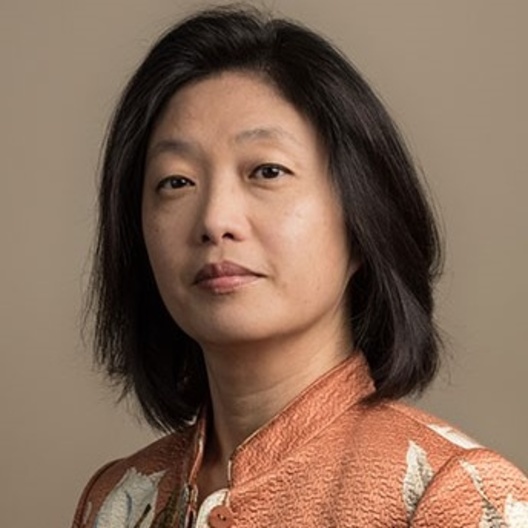 On Wednesday, August 19, LSU Health New Orleans held an “Innovation Front Porch Forum,”
which brought together faculty, students, and community members for a discussion on
science, technology, and their interface with industry. This was the first of a series
of front-porch conversations that are being planned by Sunyoung Kim, PhD, Professor
of Genetics in the School of Medicine. These forums are an integral part of a grant
from the National Science Foundation (NSF) for which she is Principal Investigator.
This $7.5 million grant award establishes LSU Health New Orleans as an NSF Center
of Research Excellence in Science and Technology (CREST), with a specific focus on
“Adaptive Nanomotor Development.” Thus, Dr. Kim refers to the Center as “CREST-AND”
for short.
On Wednesday, August 19, LSU Health New Orleans held an “Innovation Front Porch Forum,”
which brought together faculty, students, and community members for a discussion on
science, technology, and their interface with industry. This was the first of a series
of front-porch conversations that are being planned by Sunyoung Kim, PhD, Professor
of Genetics in the School of Medicine. These forums are an integral part of a grant
from the National Science Foundation (NSF) for which she is Principal Investigator.
This $7.5 million grant award establishes LSU Health New Orleans as an NSF Center
of Research Excellence in Science and Technology (CREST), with a specific focus on
“Adaptive Nanomotor Development.” Thus, Dr. Kim refers to the Center as “CREST-AND”
for short.Before highlighting the content of the inaugural Forum, which included an introduction by Boyd Professor Nicolas Bazan, MD, PhD, and which featured Chancellor Jim Dalton, PhD, as its guest speaker and discussant, it will be worthwhile to explain the broader goals of CREST Centers in general, the Innovation Front Porch Forum in particular, and protein nanomotors at the heart of its research.
What Is CREST and What Are Protein Nanomotors?
A CREST Center is not simply a research grant. Rather, NSF views a CREST Center as a vehicle for building institution-wide research and training capacity, thus creating a sustainable, nationally competitive research enterprise – with education, faculty development, student development, and broader community impact integrated into that effort. Dr. Kim was awarded her CREST award to establish a research center dedicated to understanding protein nanomotors – nature's microscopic machines.
The CREST-AND Center will investigate how these remarkable molecular machines are biologically engineered to generate and modify mechanical forces and how they interact with the cell's internal framework, other molecular motors, and naturally occurring molecules. Although protein nanomotors are far too small to see with standard microscopes, specialized imaging and other advanced technology show that they perform essential tasks inside living cells – helping to move materials, organize cellular structures, and enable cells to function and respond to their environment. At its core, the Center is seeking to understand how nature builds, controls, and adapts these tiny biological machines. Hence the term “adaptive nanomotor development.”
This work is fundamental science, but it also has the potential to create new opportunities in medicine, biotechnology, and engineering. A better understanding of molecular motors could help scientists identify mechanisms involved in disease and, ultimately, specify potential new therapeutic targets. Knowledge of how cells naturally move and deliver molecular cargo can also inspire new approaches to targeted drug delivery and other biomedical technologies. More broadly, nature's ability to create efficient machines at the molecular scale may provide insights into principles than can foster the development of new technologies. Overall, the CREST-AND Center will leverage this scientific effort to strengthen LSU's research enterprise more broadly, develop the next generation of scientists, and work with industry to promulgate opportunities for commercialization.
The August 19th Innovation Front Porch Forum
Another important goal of the Center is to connect LSU's scientific expertise with schools, educators, community organizations, industry, and other partners. Outreach and engagement will help broaden participation in STEM and share the excitement and potential of modern biological science with the wider community. To achieve this goal, Dr. Kim planned the “Innovation Front Porch Forums,” the first of which occurred on August 19th.
The Forum itself proceeded in three parts:
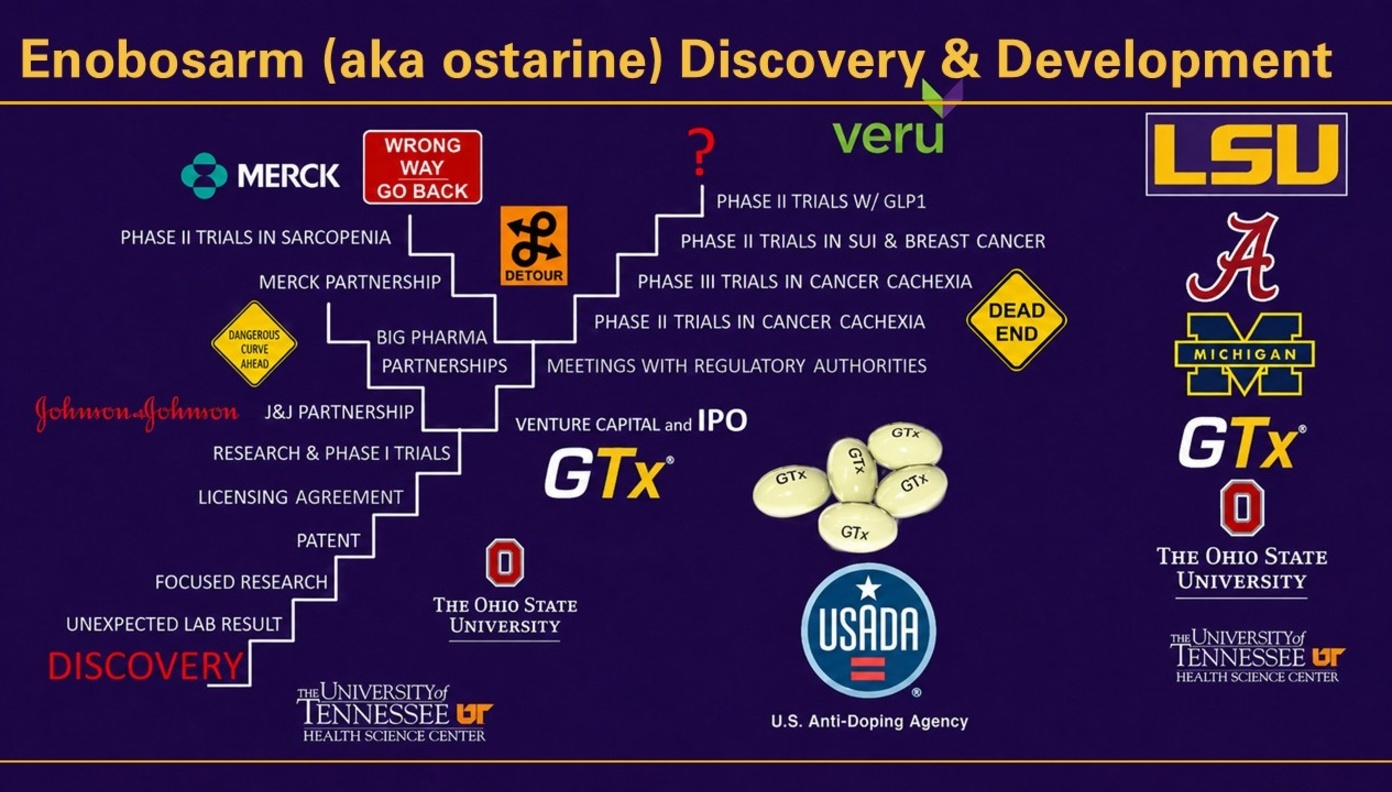
- Dr. Kim first described her journey from initial work on molecular nanomotors to the CREST Center. She traced a 20-year process beginning with post-Katrina rebuilding of laboratories and scientific relationships, proceeding to successful peer mentoring of two generations of investigators, and finally culminating in CREST-AND. Key points in Dr. Kim’s presentation included building research capacity, connecting disciplines and institutions, and translating discoveries into meaningful real-world impact.
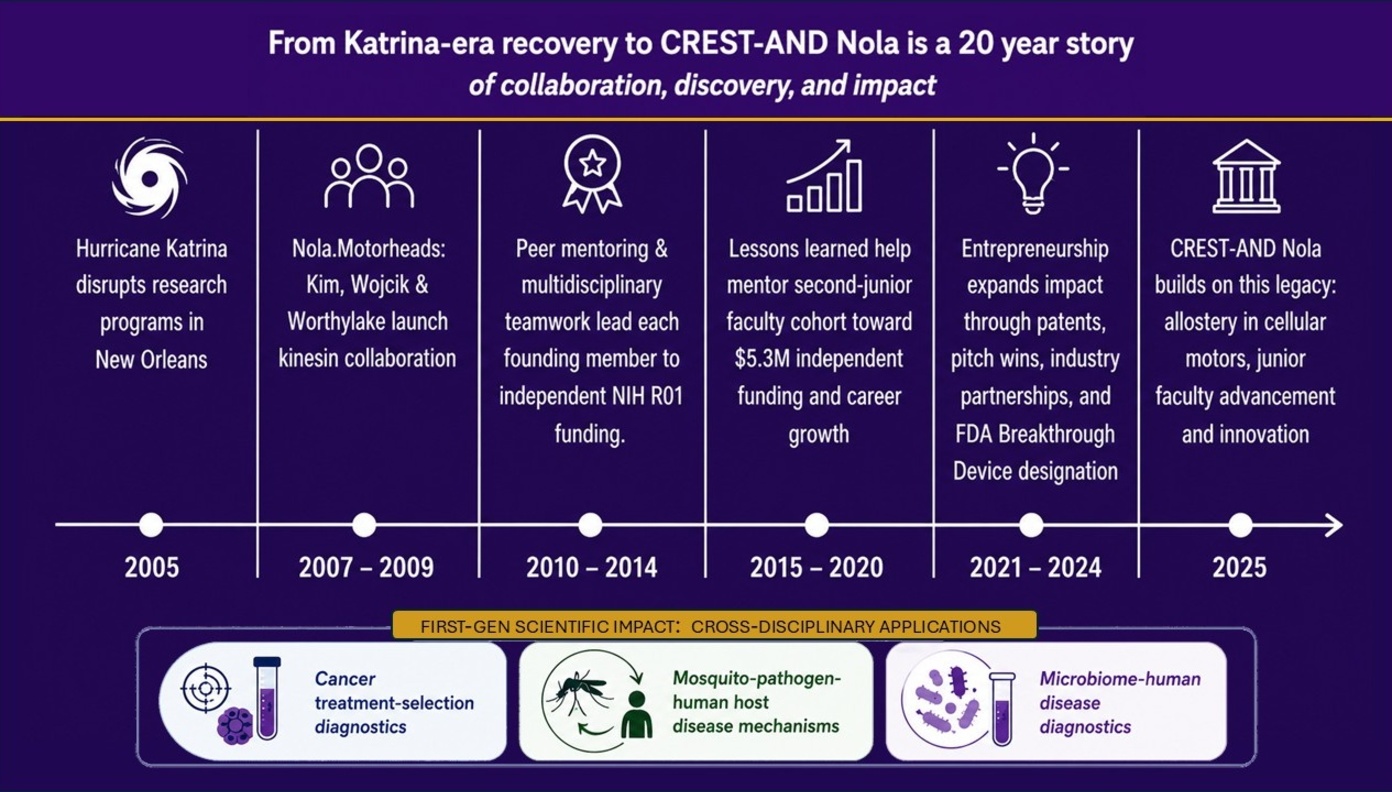
- Next, Dr. Dalton told his fascinating story – both scientific and personal – of the
long and winding road between drug discovery and commercialization. Dr. Dalton’s story
focused on a novel non-steroidal molecule developed in his laboratory that is a first-in-class
“selective androgen receptor modulator” (SARM). The molecule was designed to preserve
or build lean muscle mass (e.g., in cancer patients with cachexia), without producing
undesirable effects in other androgen-sensitive tissues. While the selective effect
on muscle was shown in phase 3 trials – a process that entailed a years-long, many-step
ordeal with variable regulatory requirements, and a leave from academia to start a
company and raise funds to support it – the results did not reach the required regulatory
improvement in physical function, as measured by stair-climbing performance. Reaching
that point required years of research, evolving regulatory requirements, Dr. Dalton’s
temporary departure from academia to guide preclinical and clinical studies, and substantial
fundraising to support clinical development. But yet the story continues! This molecule
may be useful in combination with GLP-1 drugs to preserve muscle mass while body weight
declines.
- Finally, Dr. Dalton engaged in conversation with Dr. Kim and the audience. A robust
discussion centered on science, entrepreneurship, translation, and the challenges
involved in moving discoveries from the lab toward practical application.
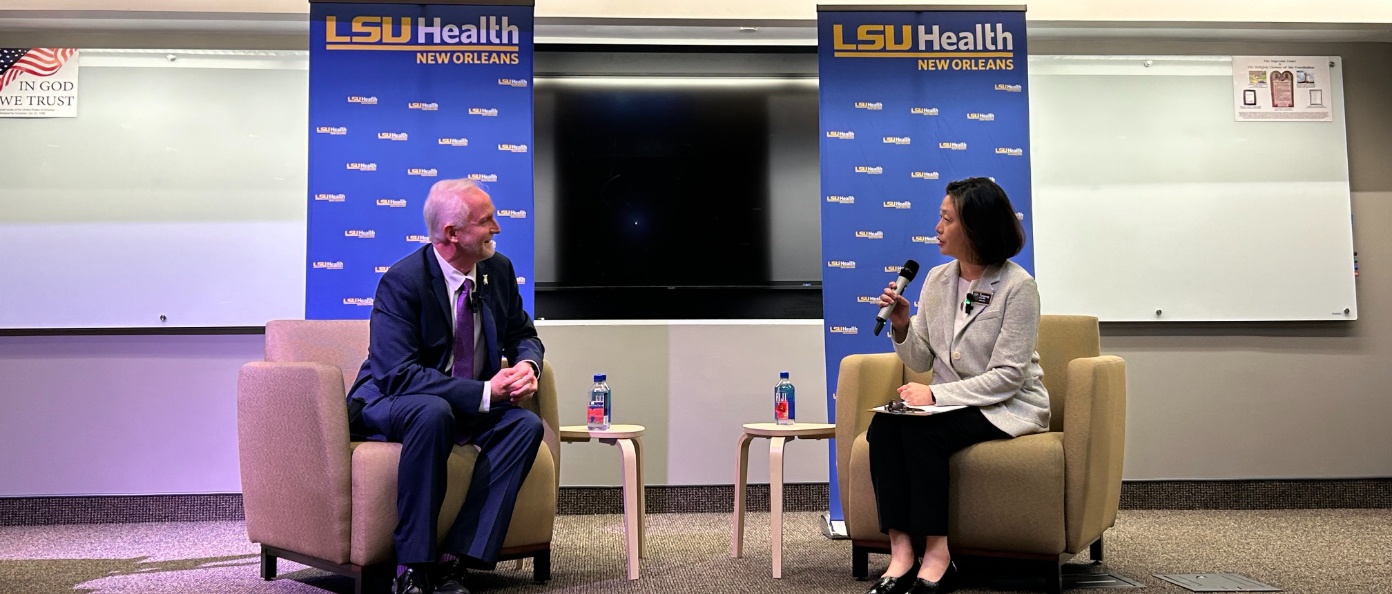
The Forum was very well received, with approximately 110 attendees and representatives
from 10 community organizations in the audience. Even more encouraging, the event
generated meaningful follow-up opportunities in research partnerships, entrepreneurship,
and trainee development. The Forum demonstrated that bringing industry leaders to
campus will create natural, low-barrier opportunities for our faculty and trainees
to explore potential research partnerships through direct, in-person conversations.
Recurring forum engagements will no doubt also help us learn from different models
of academic-industry collaboration and technology transfer, while identifying ways
in which LSU Health's scientific strengths might align with areas of strategic importance
to industry.
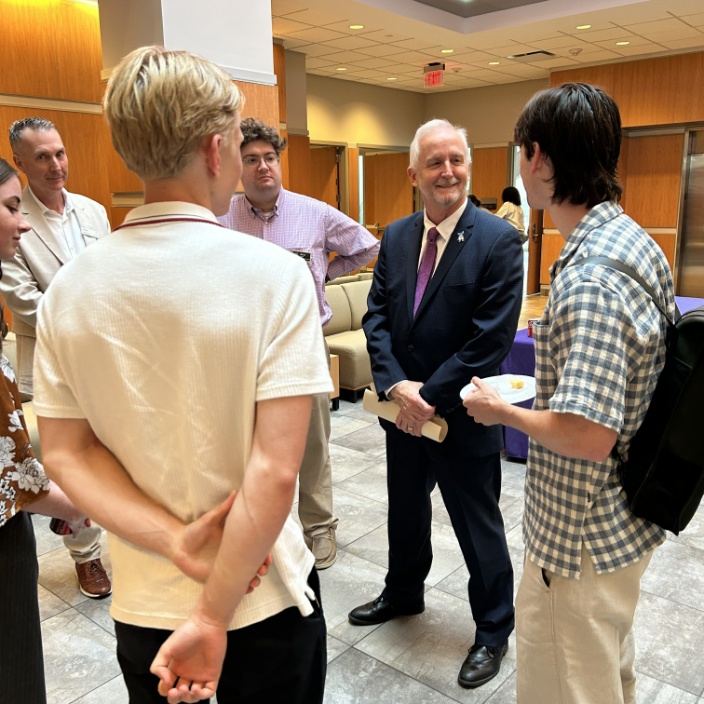 Equally encouraging momentum was seen among our trainees. Medical students interested
in entrepreneurship can now begin to develop their ideas toward participation in national
pitch competitions. At the Forum, they had the opportunity to meet directly with Louisiana
Economic Development leadership, which immediately broadened their understanding of
the state's innovation ecosystem and the resources available to them. CREST-AND will
also provide financial support for their participation in the LSU Baton Rouge I-Corps
program, helping them strengthen their entrepreneurial skills.
Equally encouraging momentum was seen among our trainees. Medical students interested
in entrepreneurship can now begin to develop their ideas toward participation in national
pitch competitions. At the Forum, they had the opportunity to meet directly with Louisiana
Economic Development leadership, which immediately broadened their understanding of
the state's innovation ecosystem and the resources available to them. CREST-AND will
also provide financial support for their participation in the LSU Baton Rouge I-Corps
program, helping them strengthen their entrepreneurial skills.
Dr. Sunyoung Kim
Dr. Kim’s path to science began with a childhood fascination: how could living systems build such extraordinary complexity from a limited set of parts? That question led her to the University of Michigan for doctoral training, including research at the University of Padua in Italy, and then to postdoctoral work at the University of Minnesota. At Michigan, she met Dr. Edward Wojcik, who became her husband, an intellectual partner, and, later, a collaborator in molecular motor research.
Their complementary perspectives – hers in biochemistry and biophysics, his in genetics and cell biology – would prove especially powerful. In 2005, Dr. Kim joined LSU Health New Orleans, attracted by the opportunity to build an independent research program in a collaborative institution serving a distinctive community. Hurricane Katrina soon tested that decision and taught her that institutions can disappear more quickly than the questions that give scientific lives meaning.
A period at Harvard Medical School then immersed Drs. Kim and Wojcik in kinesin science and redirected her longstanding interest in biological energy conversion toward molecular nanomotors – tiny machines that organize, transport, and divide living cells. They then rebuilt their home and laboratories at LSU Health, because the LSU Health community demonstrated extraordinary resilience, creativity, partnership, and commitment to community. CREST-AND is the culmination of that journey: a center connecting structural biology, genetics, imaging, artificial intelligence, and workforce development to understand adaptive nanomotors while building enduring scientific capacity. Beyond the laboratory, she values family life, mentoring young scientists, entrepreneurship, and the culture and community of New Orleans – interests that keep science connected to people and place.
Summary
NSF explicitly states that it expects CREST awardees to "catalyze institutional transformation" by developing research capabilities aligned with the institution's long-term missions. It also expects Centers to leverage CREST funding into additional federal, state, local, private-sector, and philanthropic investment. Thus, the goal of CREST-AND at LSU Health New Orleans is not simply to fund five years of research; it is to use research as a catalyst to strengthen the institution's long-term capacity for discovery, education, innovation, and community impact.
Specifically, our NSF CREST Center will strengthen our capacity to conduct nationally competitive research. It will bring together faculty, students, and external partners to advance important scientific questions while building research infrastructure and developing faculty research careers. It will provide students with hands-on opportunities to participate in discovery and entrepreneurship. The Center will also broaden participation in STEM, develop educational and community partnerships, and leverage the research and collaborations generated through the award to attract additional external funding and create a sustainable research enterprise.
In this light, we are extremely grateful to Dr. Kim and the others who contributed to the CREST-AND grant for bringing this potentially transformative NSF-funded opportunity to LSU Health New Orleans.